


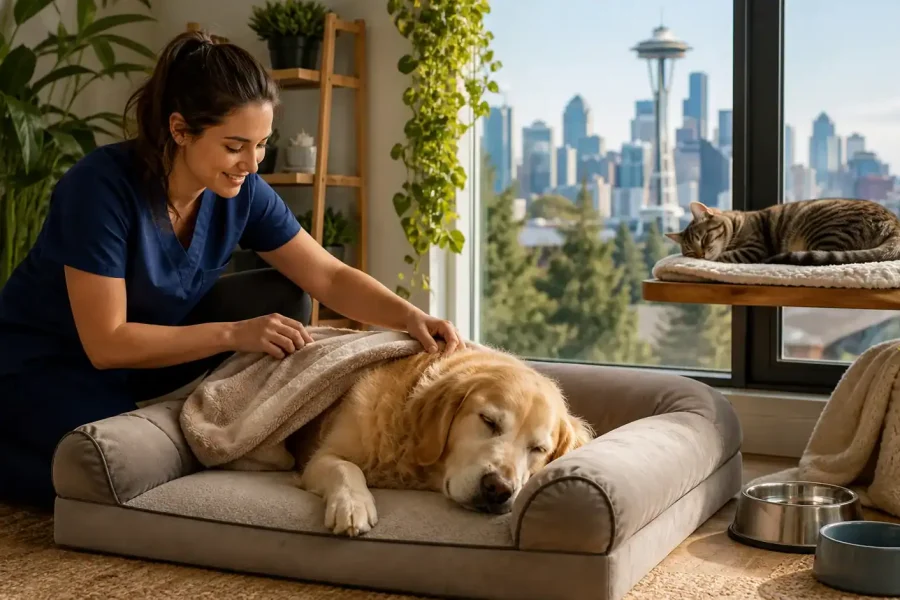
Rest is a core part of pet care, not just what happens when a dog or cat finally runs out of energy. Walks, play, training, adventures, visitors, household sounds, and happy excitement all give pets a lot to take in.
At The Pet Care Club of Seattle, we see how much a balanced day matters. Pets need meaningful activity, but they also need uninterrupted sleep, calm connection, and low-pressure time to settle. During Seattle’s busy late-summer days, longer daylight hours, outings, travel, and shifting family schedules can add even more stimulation. The goal is not to avoid fun, but to make sure your pet has the space to enjoy it without becoming overwhelmed.
Rest Builds Everyday Well-Being
A pet’s body and brain are always taking in information. A dog may be watching another dog across the street, listening to construction noise, following a training cue, or deciding how close they want to get to a new person. A cat may be tracking changes in the home, noticing a visitor’s scent, or choosing whether a new sound feels safe.
All of that processing takes energy. Quiet recovery helps pets regulate emotions, restore their energy, and feel secure in their surroundings. When we plan care, we look beyond how much activity a pet gets and consider whether that activity leaves them able to settle afterward.
A well-rounded routine often includes:
- Movement that fits the pet’s age, comfort, and energy level
- Time to sniff, observe, or play without pressure
- Calm moments with trusted people
- A peaceful place for uninterrupted sleep
Rest is not “doing nothing.” It is a meaningful part of how pets handle the rest of their day.
Real Downtime Helps the Nervous System Settle
Nervous system regulation may sound technical, but the idea is simple. When something is exciting, new, frustrating, loud, or physically demanding, a pet’s body may stay alert even after the event is over. Recovery time helps that alert feeling fade so the pet can return to a calmer baseline.
Being tired and being settled are not always the same thing. A dog who paces, barks, gets mouthy, or cannot relax after a full day may not need another big activity. They may be overstimulated. Cats can show a need for space differently, perhaps by hiding, becoming watchful, or choosing distance from people and other pets.
Our behavior-focused dog walking approach considers a dog’s emotional state, not just the distance covered. Some dogs benefit from a slower walk with time to sniff. Others may need to watch the world from a comfortable distance, move at their own pace, and decompress before returning home. Those quieter choices can help a walk feel supportive rather than draining.
Activity Needs Recovery for Better Behavior
Exercise, enrichment, training, social time, and new experiences can all be valuable. Still, every one of them creates a recovery need. The right rhythm depends on each pet’s age, health, temperament, past experiences, and current stress level.
We often encourage families to notice the difference between a pet who is pleasantly content and one who is wound up. For some dogs, adding longer walks, nonstop fetch, or more dog park time can raise arousal instead of helping them settle. Predictable transitions and quiet time at home may be just as important as the outing itself.
Seattle’s warm August afternoons are a good example. Earlier walks, shaded routes, water breaks, and shorter outdoor time may be more comfortable for some dogs, followed by cooling down and resting at home. The same principle applies year-round: activity should leave enough energy for a pet to recover comfortably.
A balanced schedule may look different from one pet to the next:
- A puppy may need short outings and frequent naps
- An adult dog may enjoy a thoughtful walk followed by calm home time
- A senior pet may need slower pacing and more predictable rest
- A shy cat may prefer brief play followed by access to a quiet resting space
Sleep Helps Pets Process Their Experiences
Sleep gives dogs and cats time to absorb what happened during the day. After a training session, a new walking route, a social interaction, or a routine change, many pets need quiet space before they are ready for more input. This can be especially meaningful for puppies learning about the world, newly adopted pets, and sensitive pets adjusting to change.
Dogs and cats may seek recovery in different ways. A dog may benefit from a calm decompression period after an exciting walk or a visit with guests. Cats often rest best when they can choose their own hiding spots, vertical spaces, and favorite beds. Both species need to feel safe before they can fully relax.
After a pet care visit, training lesson, adventure, grooming appointment, or family gathering, we recommend protecting the next part of the day from extra demands when possible. Offer water, keep the environment calm, and let your pet choose sleep or quiet observation instead of asking for another activity right away.
Recognizing Healthy Rest and Recovery
Healthy rest often looks peaceful and unforced. Your pet may have relaxed muscles, soft eyes, a comfortable sleeping position, a normal appetite, and a willingness to engage after waking. A pet who can settle without needing constant attention is often better prepared for everyday challenges.
Not all quiet behavior means a pet is truly resting, though. Hiding, freezing, panting while at rest, pacing, startling easily, repeated licking, or struggling to settle can suggest that a pet has not fully recovered. We encourage compassionate observation rather than punishment when you notice these changes.
Every pet has an individual baseline. Puppies, senior pets, highly active dogs, shy cats, and pets recovering from illness or difficult experiences may need extra sleep and more predictable downtime. Sudden or significant changes in sleep, appetite, mobility, or behavior are worth discussing with your veterinarian.
Put Recovery at the Center of the Day
A balanced day includes activity, nourishment, connection, and quiet recovery. Low-traffic resting areas, comfortable sleep spaces, consistent meals and walks, and permission to opt out of social interaction can all help pets feel more secure. Care should be planned around each pet’s ability to recover, not only around how much they can do.
As summer routines stay full, take a moment to notice whether your pet has enough time and space to truly settle. A calm, rested pet is not missing out on life. They are building the comfort and emotional balance needed to enjoy it.
Support Better Walks And Happier Days
At The Pet Care Club of Seattle, we tailor each outing to your dog’s individual needs, comfort level, and pace. Our behavior-focused dog walking gives your pet purposeful activity, patient guidance, and time to decompress. Reach out today to discuss a walking routine that supports your dog’s well-being.