


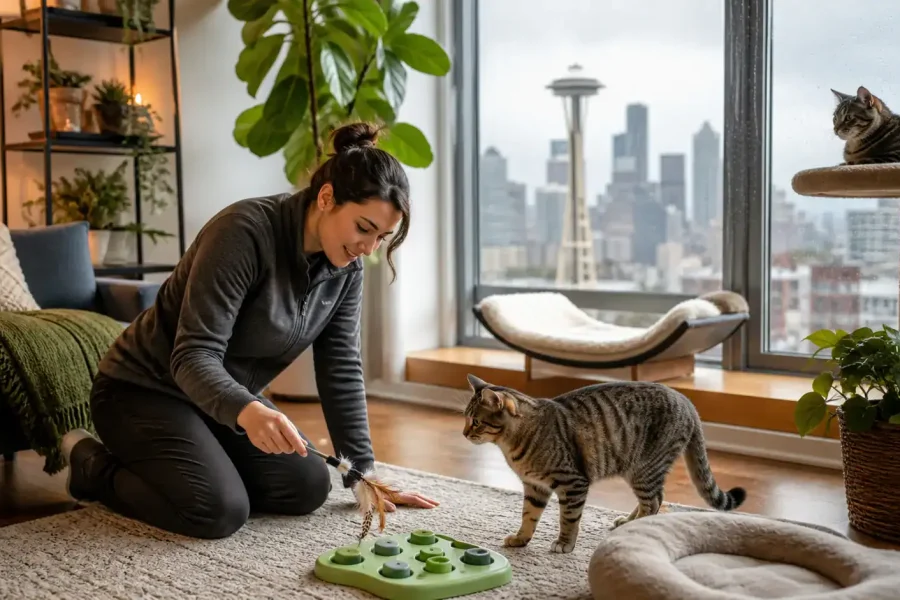
Turn Every Cat Visit Into Stress-Free Enrichment
Cats handle travel changes in very different ways. Some hide under the bed and skip meals. Others race around with late-night zoomies, and some older cats seem a little lost when routines shift. When you are away, your cat does not just need food in a bowl and a clean litter box. They need comfort, predictability, and the right kind of fun.
Enrichment-focused pet visits in Seattle are about emotional health, not just survival. Instead of a quick in-and-out, each visit becomes a calm, thoughtful routine that gives your cat choice, control, and safe stimulation. At The Pet Care Club of Seattle, we are a woman-owned, enrichment-focused pet care company, and we build visits room by room so shy, high-energy, and senior cats all feel supported. Below, we will walk through how to set up your home, what a professional sitter actually does, and how to adjust for different personalities, from nervous wallflowers to wild hallway sprinters.
Setting the Stage Before You Travel
Good enrichment starts before the suitcase comes out. Your home setup can make visits smoother and help your sitter keep your cat calm and engaged.
Think through your home like a cat would:
- Keep rooms at a steady, comfortable temperature, especially on warmer summer days.
- Create safe window perches with secure screens so your cat can watch birds and neighbors without risk.
- Offer vertical spaces like shelves, trees, or the back of a couch to give your cat confidence and escape routes.
Safety checks are just as important as toys:
- Secure balcony doors and any cracked windows where a nervous or curious cat might push through.
- Put away string toys, hair ties, and ribbon that might be swallowed when no one is there to supervise.
- In multi-cat homes, consider microchip feeders or raised feeding spots so each cat can eat in peace.
Before you leave, share a clear communication plan with your sitter. Helpful notes include:
- Medical history, current medications, and your regular vet.
- Usual hiding spots, favorite nap zones, and rooms that are off-limits.
- Behaviors that mean “all good,” such as brief zoomies or soft purring, and “red flags” like skipping more than one meal, vocalizing in distress, or sudden grumpiness.
Most of all, outline what enrichment matters most for your cat: very slow trust-building for shy cats, strong play sessions for athletes, or gentle, short activities for seniors.
Living Room Rituals for Shy or Nervous Cats
The living room is often the heart of the home, so we treat it like a safe base. For shy or nervous cats, predictability is everything.
A sitter might:
- Enter slowly and softly, using the same greeting words every time.
- Keep body language small and sideways, not looming or direct.
- Move in a set pattern, like setting down keys in the same spot and then sitting on the same chair.
If a cat is nervous, we focus on low-pressure engagement, not quick cuddles. Helpful tools include:
- Scattering a few treats in open but safe spots near furniture or tunnels.
- Placing a blanket or shirt with your scent where your cat already likes to rest.
- Simply sitting quietly, reading, or letting a quiet TV or soft music play in the background.
We avoid staring, chasing, or reaching under furniture. Instead, we let environmental enrichment do the work. Simple living room ideas:
- Cardboard boxes with small cut doors so your cat can peek and hide.
- Tunnels or low stools that create “under” paths across the room.
- Easy foraging toys, like kibble dropped into egg carton cups, for gentle mental work.
The goal is that over time, your shy cat starts to connect the sitter with calm, good things, not pressure.
High-Energy Play Sessions in Hallways and Common Areas
For high-energy cats, hallways and open common areas are perfect “gyms.” These cats often act out from boredom, not bad behavior, so structured play becomes the main event of pet visits in Seattle homes.
A typical play block might look like:
- Warm-up: a few minutes of light wand toy swishing or rolling balls to see what your cat prefers that day.
- Active chase: running a feather toy along the hallway or up a cat tree to encourage jumping and sprinting.
- Cool-down: slower movements, nose-target games, or gentle petting if your cat enjoys touch.
Timing and intensity matter. Too little play and your cat still has pent-up energy. Too much, and they can get overstimulated or nip. A sitter adjusts based on:
- Breathing and body language, such as wide eyes or twitchy tails.
- How quickly the cat shifts from focused chasing to distractible or cranky.
We also give high-energy cats mental workouts, not just sprints. Simple options:
- Rotating puzzle feeders so they never feel boring or predictable.
- Short clicker training sessions, like targeting a hand or stepping onto a mat.
- Trick practice, such as “sit,” “spin,” or “up,” which can be very rewarding for bright cats.
These sessions help your cat come down relaxed and ready to rest between visits, instead of pacing the apartment.
Bedroom and Quiet Room Comfort for Senior and Sensitive Cats
Bedrooms or home offices often turn into quiet retreat spaces, especially for seniors or very sensitive cats. These rooms are perfect for gentle routines.
A sitter might:
- Announce their presence with a soft voice at the door, then approach slowly if your cat is awake.
- Check bedding to be sure it is clean, cozy, and easy to climb onto.
- Look for simple ways to help sore joints, like making sure ramps or steps are steady and clear.
Comfort-first enrichment works best here. Some ideas:
- Light brushing or grooming sessions, only if your cat enjoys it and can move freely.
- Snuffle mats or treat scatter on a rug, so your cat can “hunt” without having to jump.
- Scent games with catnip, silvervine, or favorite toys tucked near safe sleeping spots.
For nights, we think about how the room feels when no one is home. Your sitter can:
- Adjust curtains so there is soft, steady light but not harsh street glare.
- Turn on gentle white noise or a fan if loud sounds outside tend to startle your cat.
- Keep bedtime routines, like placing a favorite blanket in the same corner or offering a small snack.
These details help older or anxious cats stay grounded even when the city is busier and brighter.
Kitchen, Litter Areas, and Health Check Moments
Kitchens, feeding stations, and litter areas might not feel exciting, but they hold key information about your cat’s health.
Mealtime can still be enriching:
- Using small puzzle feeders or food toys so your cat has to think a bit for their meal.
- Splitting food into two or three small servings during the visit, if that fits your cat’s normal routine.
- Adjusting where bowls are placed so shy cats have backing against a wall and clear sightlines.
Litter box checks act like daily reports. A professional sitter will note:
- Size and number of clumps.
- Unusual smells or signs of strain.
- Changes from what you described as normal.
Along with that, a quick mini wellness scan can flag early concerns. During calm moments, we can check for:
- Coat changes, such as sudden dandruff or greasy patches.
- Dry gums, thick drool, or signs of dehydration.
- Extra hacking, swallowing, or hairball trouble.
Tracking these patterns across several pet visits in Seattle makes it easier to notice when something is off and may need a vet’s attention.
Bring Enrichment-Focused Cat Visits Home to Seattle
A thoughtful, room-by-room routine turns pet care into support for your cat’s whole personality. Shy cats gain confidence in safe living rooms, high-energy cats get their hallway “workouts,” and senior or sensitive cats enjoy quiet, cozy comfort in bedrooms and napping spots. Meanwhile, smart use of kitchens and litter areas gives real clues about health and stress.
You can create a simple “cat visit plan” for your own home. Note which rooms are best for play, hiding, and sleep, list favorite toys and treats, and write out small routines your cat already loves. Share these details with your sitter so every visit feels familiar and enriching. At The Pet Care Club of Seattle, we shape our enrichment-focused cat visits around exactly these kinds of details, so cats of every age and energy level feel safe, seen, and cared for while you are away.
Keep Your Pet Happy And Cared For While You Are Away
Whether you are heading out of town or working long hours, we provide reliable, loving care that keeps your pet’s routine on track. Our pet visits in Seattle are tailored to your companion’s unique needs, from fresh food and water to playtime and peace of mind updates. At The Pet Care Club of Seattle, we treat your pets like family so you can step away without worry. Schedule your visits today and let us take care of the rest.