


When the Litter Box Becomes a Stress Box
You walk into your bedroom, notice that familiar smell, and your heart sinks. There is a wet spot on the bed or a little puddle on the rug, and your sweet cat suddenly feels like a mystery you cannot solve. It is frustrating, worrying, and yes, a little gross, especially when you feel like you are doing everything right. Before the guilt or anger sets in, it helps to remember that your cat is not being spiteful. Peeing outside the litter box is usually your cat’s way of saying something is wrong.
At The Pet Care Club of Seattle, we see this issue come up often with families who love their cats but feel stuck and embarrassed. Inappropriate peeing almost always has a cause you can identify, and in many cases, you can turn things around with some thoughtful changes. Cats react to medical issues, stress, and their environment, and they are very particular about their bathroom. With a calm plan, patience, and, when needed, support from your vet and local partners like a cat sitting service in Seattle, most cats can get back to reliable litter box habits.
Medical Reasons You Should Rule Out First
When a cat suddenly starts peeing outside the litter box, the first step is not to buy a new kind of litter. It is to call the vet. Changes in bathroom habits can be one of the earliest signs that your cat is uncomfortable or in pain. This is especially urgent for male cats, who can develop urinary blockages that become life-threatening if they cannot pass urine at all. Waiting to see if it “just goes away” can put your cat at real risk.
Common medical causes include urinary tract infections, crystals or stones that irritate the bladder, kidney disease, and diabetes. Painful conditions like arthritis can also play a big role, since a cat with achy joints may avoid a box that is hard to climb into or far away from their favorite resting spots. If the box is downstairs and their painful hips say “no,” your bed or a nearby rug might feel like the only practical option.
Watch for warning signs that need immediate attention, such as:
- Straining in or out of the box with little or no urine coming out
- Frequent tiny pee spots instead of normal-sized puddles
- Blood in the urine or very dark urine
- Crying, hissing, or clearly reacting in pain when urinating
- Excessive licking of the genital area, or any sign they cannot pee at all
It is very important not to punish your cat for these accidents. Medical issues are not behavior problems, and your cat is not choosing to be difficult. Once you get answers from your vet and any treatment started, it becomes much easier to tell what part of the problem is physical and what might be related to stress, environment, or habit.
Litter Box Setup Mistakes That Drive Cats Away
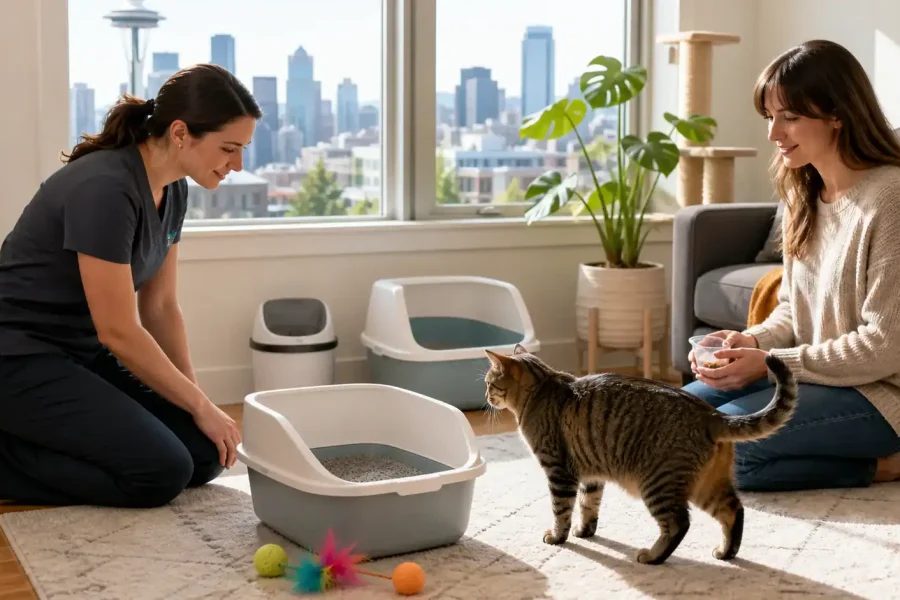
If your vet rules out medical problems, the next step is to take a hard look at the litter box setup. Cats tend to have strong opinions about how and where they eliminate. Even small details, like the type of box or the smell of the litter, can make the difference between “yes, I will use this” and “absolutely not.”
A few basic guidelines help most homes:
- Have at least one box per cat, plus one extra
- Spread boxes across different areas of your home, not all in one room
- If you have multiple floors, try to offer a box on each level
Common turn-offs include covered boxes that trap smells inside, boxes that are too small for the cat to comfortably turn around in, and heavily scented litters. Self-cleaning boxes might sound convenient, but some cats are startled by the noise or motion and decide the box is unsafe. Sudden changes in litter brand or texture can also cause a cat to look for a more familiar feeling spot, like soft bedding or laundry.
Cleanliness matters a lot. Many cats will avoid a box that is not scooped at least once a day, and some are even more particular. Senior cats and anxious cats may need pristine boxes, scooped twice daily and fully changed more often. Placement matters too. Boxes near loud appliances, kids’ play areas, busy hallways, or next to food and water can feel stressful or unsafe. If the box is in a corner with only one exit, some cats feel trapped and prefer an open area where they can see and escape if needed.
Stress, Territory, and Emotional Triggers
Cats are creatures of routine, and their litter box habits are closely tied to how safe they feel. When their world changes, some cats express that stress through their bathroom choices. It might look like “protest peeing,” but it is really an emotional signal. They want control, predictability, and a territory that feels secure.
Stress can come from many directions:
- A new baby, partner, roommate, or frequent guests
- Home changes like remodeling, new furniture, or a move
- Outdoor cats visible through windows or near entryways
- New pets moved in too quickly, or a big shift in your schedule
In multi-cat homes, litter box issues often involve subtle bullying. One cat may hover near the box, ambush another cat on the way out, or block the hallway leading to the litter area. The picked-on cat then starts peeing behind furniture, in closets, or on soft things that feel hidden and safer.
To lower stress, focus on predictable daily routines and plenty of cat-friendly spaces. Vertical options like cat trees or shelves, quiet hiding spots, and multiple resting areas help each cat feel they have their own territory. Gradual introductions for new pets prevent big shocks to the household. Pheromone diffusers, more frequent play sessions, and puzzle feeders can also help nervous cats burn off tension and feel mentally satisfied.
Step by Step Plan to Get Your Cat Back in the Box
Once you have ruled out medical issues and adjusted the basic setup, it helps to take a structured approach. Change too many things at once and it becomes hard to tell what actually helps. Shift one or two variables, then watch your cat’s response for several days.
A simple plan looks like this:
- Vet check and any needed treatment
- Litter box audit and upgrades
- Stress reduction in the home
- Consistent cleanup of any accidents
Some cats benefit from gentle “retraining.” This does not mean punishment or locking them away. Instead, you can create a calm, cat-friendly room with everything they need: a couple of ideal litter boxes, soft beds, hiding spots, vertical spaces, toys, and regular human interaction. Keep them in that space for a period while you monitor litter use. As they consistently choose the box, you can slowly expand their access to other areas again.
Cleaning accidents properly is essential. Cats have powerful noses and may keep returning to the same spot if they still smell urine. Use enzymatic cleaners designed to break down urine, and treat both the surface and any padding underneath. Avoid ammonia-based products, since ammonia smells like urine to cats and can accidentally mark that area as a bathroom.
Through all of this, focus on rewarding what you want instead of punishing what you do not want. Never rub your cat’s nose in urine or yell at them. Instead, quietly praise or offer a small treat when you see them use the box. If you are away at work or traveling while you are in the middle of these changes, a reliable cat sitting service in Seattle can help keep routines consistent, monitor litter habits, and follow your plan so your cat does not backslide.
When to Call in Professional Help
Sometimes, even with a good plan, accidents still happen. If your cat keeps peeing outside the box despite a clean vet bill, better boxes, and focused stress reduction, it might be time to bring in more help. Ongoing accidents, clear fear or aggression between cats, or a cat that seems more anxious, withdrawn, or reactive are signs that a more detailed behavior assessment could make a difference.
A qualified trainer or feline behavior consultant can look at the layout of your home, the personalities and histories of your cats, and your daily schedule to create a customized strategy. This might include changes to where you place resources like food, water, and litter, step-by-step protocols for reintroducing spaces or other pets, and tailored enrichment ideas that fit your lifestyle. For families in Seattle, an enrichment-focused cat sitting service in Seattle can be part of this support system by tracking litter box use, spotting early changes, and sharing notes that your vet or behavior specialist can review.
The most important thing is not to wait until you feel completely overwhelmed or start thinking that rehoming is the only answer. Peeing outside the litter box is a serious problem, but it is usually solvable. With patience, clear information, and the right team on your side, you can protect your home and keep your bond with your cat strong.
Helping Your Cat Feel Safe, Clean, and Understood
At the heart of this issue is a simple idea: inappropriate peeing is a message, not malice. Your cat might be asking for medical help, a more comfortable litter box, a safer feeling territory, or a calmer daily rhythm. When we listen to those signals instead of taking them personally, we can respond in ways that actually solve the problem.
A practical order of operations helps keep things clear. Start with a vet check to rule out pain or illness. Next, give your litter setup an honest audit and make improvements, from the number of boxes to their size, location, and cleanliness. Then, look closely at your cat’s stress levels and routine, and make thoughtful changes that support a sense of safety. Clean any accidents thoroughly, reward correct litter use, and add professional help if things are not improving.
Most cats can return to steady, reliable litter box habits when their needs are met with patience and empathy. At The Pet Care Club of Seattle, we know how stressful this can feel for families, and we also know that with the right support, there is almost always a path forward that respects both you and your cat.
Enjoy Stress-Free Travel With Trusted Cat Sitters
Give yourself peace of mind on your next trip by letting The Pet Care Club of Seattle care for your cat in the comfort of home. Our experienced sitters follow your routine, provide playtime and cuddles, and keep you updated so you never have to worry. Explore our dedicated cat sitting service in Seattle and schedule visits that fit your schedule. Book today so your cat can stay relaxed and content while you are away.