


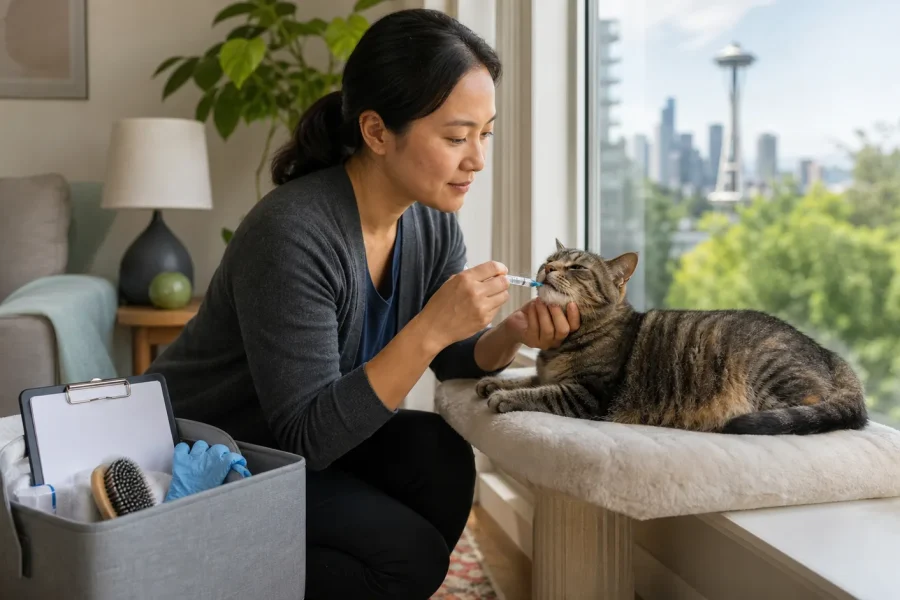
Keeping Medical and Special-Needs Cats Safe at Home
Caring for a cat with medical or special needs at home can feel heavy. Medical and special-needs cats might have chronic illness, recent surgery, mobility limits, neurological issues, or big anxiety and behavior challenges. They often need more structure, more observation, and more help with daily tasks that used to be easy.
Many cat parents worry they will miss a subtle change, feel guilty leaving for work or travel, and get worn out by constant decisions about food, meds, and monitoring. That stress is real, especially as cooler weather arrives, routines shift, and holiday travel plans start to form.
Our goal here is simple: share practical ways to set up your home, manage medication routines, and track your cat’s daily health, plus help you know when in-home cat sitting is the safer choice than relying on neighbors or traditional boarding.
Building a Safe, Low-Stress Home Setup for Special-Needs Cats
A calm, safe space can make a big difference for a cat that does not feel 100 percent. Think about how your cat moves through the home and where they might struggle.
For environment and accessibility, consider:
- Low-sided litter boxes placed on easy-to-reach paths
- Raised food and water dishes so seniors or arthritic cats do not have to bend as far
- Non-slip mats near bowls and litter boxes for better footing
- Safe ramps or steps to reach favorite beds or window spots
Try to reduce fall risks and overstimulation:
- Block access to high, wobbly shelves
- Secure windows and balcony doors, especially in apartments
- Keep loud tools and big projects away from areas your cat uses to rest
- Give kids and guests clear rules about handling and noise around the cat
A quiet recovery or comfort room can help a lot. Choose a space with soft bedding, a couple of hiding options, and a steady temperature, which matters in our cool, damp Seattle seasons. This can be a spare room, a large bathroom, or even a corner of your bedroom with a pet gate.
Comfort and routine cues are just as important. Try to:
- Keep feeding, medication, and gentle play times consistent
- Use familiar scents, like your unwashed T-shirt in a favorite bed
- Add soft background sound, such as a low TV or white noise, to mask sudden noises
- Set simple lighting timers so senior or visually impaired cats are not left in total darkness
If you know travel is coming, set up a clear “care station” with labeled supplies and meds. Make it easy for an in-home cat sitter or trusted helper to follow your system without guessing.
Medication Routines That Actually Work in Real Life
Medication is often the hardest part of caring for a medical or special-needs cat. Working with your veterinarian comes first. A detailed treatment plan helps you understand:
- Exact dosing and timing
- Which meds can be given with food and which cannot
- Possible side effects and drug interactions
- What counts as an emergency for your specific cat
Ask if there are easier formulations, such as flavored liquids, transdermal gels, compounding options, pill pockets, or extended-release versions that match your schedule better. Request written instructions you can share with anyone who helps, including a professional cat sitter.
At home, build a schedule that fits your real life. Look at work hours, commute time, and family routines. Many people find it helpful to:
- Use phone alarms for every dose
- Keep a written chart near the meds to note doses given, refused, or vomited
- Prepare meds at the same time each day to make it a habit
Use positive reinforcement whenever possible. Pair meds with high-value treats if allowed, gentle handling, and short, calm sessions. Avoid chasing or cornering your cat, which can turn them into a “medication ninja” who runs at the first sign of a pill bottle.
Stay safe with your own body too. Never forcefully pry a cat’s mouth open without training from your vet team. If your cat is hissing, swatting, or trying to bite, stop and ask for help. For some families, it is safer to have a trained person handle pills, injections, or subcutaneous fluids.
That is where in-home cat sitting can help. A professional sitter with medical experience is especially helpful if your cat:
- Needs multiple daily doses at set times
- Receives injections like insulin
- Is recovering from surgery and needs close monitoring
- Requires care while you are traveling or working long days
Consistency matters. The same person using the same safe techniques over time can reduce stress for your cat and give you better information through your tracking system.
Daily Monitoring: Spotting Problems Before They Become Emergencies
Medical and special-needs cats often show tiny clues before a big problem. Building a simple daily monitoring habit can help you spot those changes early.
Key things to track every day include:
- Food intake, such as amount eaten, refusal of favorite foods, or sudden picky behavior
- Water intake or signs of increased thirst, which can signal kidney disease, diabetes, or thyroid issues
- Litter box habits, such as number of urine clumps, stool consistency, straining, vocalizing, or blood
- Behavior changes, like extra hiding, clinginess, less grooming, restlessness at night, or louder vocalizing
Cooler months can mean less activity, so it is even easier to miss small litter box changes. A simple daily log, either in an app or a notebook near your care station, can keep everything in one place. Include sections for:
- Meds given
- Food and water
- Litter box notes
- Behavior or mood
- Any questions for your vet
Take weekly photos or short videos of your cat walking, jumping, grooming, or showing their body condition. These make it much easier to show trends to your vet. Weighing your cat regularly with a baby scale or a household scale method helps you catch early weight loss or gain, which can be very important in medical cats.
Some red flags should never wait. Call your veterinary team or an emergency clinic right away if you see:
- Trouble breathing or fast, labored breaths
- No eating at all for 24 hours
- No urine output, especially if your cat is trying to go
- Repeated vomiting or vomiting paired with lethargy
- Seizures, collapse, or sudden severe limping
If your cat has a known condition, ask your vet to list 2 or 3 warning signs that are specific to that condition. Add those to your written emergency plan so you and any sitter know when to act fast.
Choosing in-Home Cat Sitting Versus Boarding or Neighbors
When you need help, you may wonder if you should ask a neighbor, choose boarding, or hire in-home cat sitting. For many medical and special-needs cats, staying at home is often safer and calmer.
In-home cat sitting can:
- Reduce stress by keeping your cat in a familiar space
- Avoid extra disease exposure that can come with group boarding, especially during busy travel seasons
- Support better monitoring with longer, focused visits
- Allow complex routines, like special diets and specific handling, to be followed closely
When you look for a professional cat sitter, ask about:
- Experience with pills, liquids, injections, fluids, and post-op care
- Comfort monitoring chronic illnesses, like kidney disease or diabetes
- Professional standards, such as insurance, references, and clear emergency protocols
- Communication style and visit length
For Seattle-area families, it is helpful if your sitter knows local traffic, nearby veterinary options, and how seasonal issues like storms, smoke, heat waves, or cold snaps may affect visit timing and indoor comfort.
Preparing your sitter for success makes everything smoother. Create a written “cat care playbook” that includes:
- Diagnoses and current medications
- Feeding routine and food types
- Normal habits, favorite spots, and hiding places
- Known stress triggers and what helps calm your cat
Share your vet contact information, the local emergency clinic, and written guidelines on when to seek urgent care versus when to call you first. Walk your sitter through your home to show medication techniques, where supplies are stored, and how to keep doors and windows secure for a safety-first routine.
Creating a Year-Round Care Plan Before Your Next Trip
Strong habits built now will help you and your cat all year, not just during the busy seasons. When you refine your home setup, medication workflow, and daily tracking before life gets hectic, you feel more confident stepping out the door.
Many families find it helpful to do a short trial with a professional sitter before a big trip. A couple of drop-in visits can show you how your cat responds, reveal any missing details in your written instructions, and give the sitter time to get comfortable with your routines.
You can also create a simple seasonal checklist that you update a few times a year. Include items like reviewing vet records, refreshing your emergency plan, checking medications and supplies, and updating your cat care playbook for any new diagnoses or behavior changes. That kind of steady, thoughtful care can make home a safer, softer place for every medical and special-needs cat.
Give Your Cat Stress-Free Care While You’re Away
Whether you are gone for a long weekend or an extended trip, we make sure your cat stays comfortable at home with familiar routines, food, and snuggles. Our in-home cat sitting service keeps your cat’s environment calm while we handle feeding, litter, medications, and playtime. At The Pet Care Club of Seattle, we treat every visit like we are caring for our own pets, with attentive updates so you always know how your cat is doing. Reach out today to reserve your preferred dates before they fill up.