


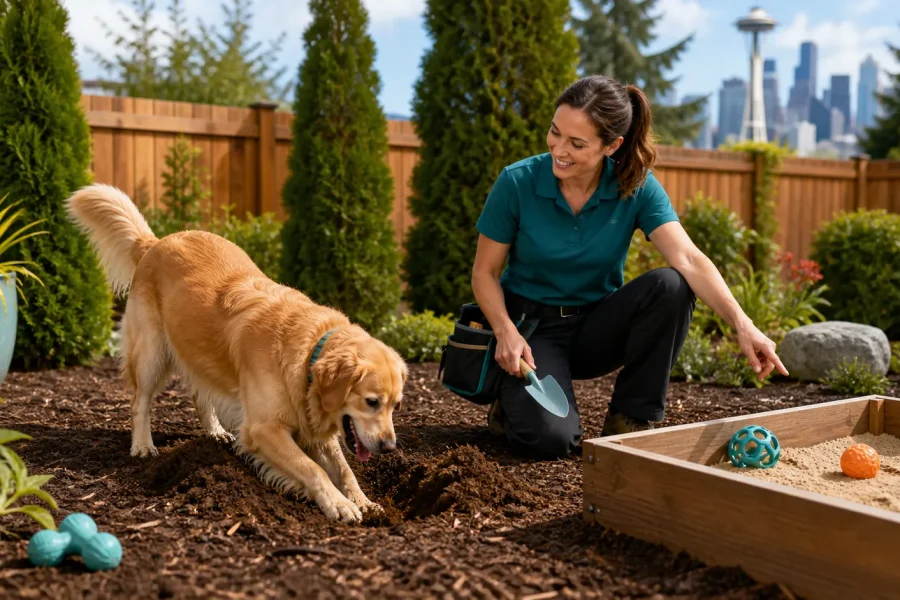
Dogs dig holes for many normal reasons, and the behavior does not mean your dog is “bad” or trying to upset you. Digging can be fun, comforting, exciting, or a way to cope with feelings. What it means depends on what happens before, during, and after your dog starts moving dirt.
We encourage Seattle-area pet parents to look for patterns. Notice where your dog digs, how often it happens, whether it occurs only when they are alone, and what they do once the hole is made. Those clues can help us tell the difference between instinct, a need for more enrichment, stress, escape behavior, or a possible health concern.
What Your Dog’s Digging Is Communicating
A hole in the yard is often communication, not misbehavior. Some dogs dig with intense focus, sniffing and pawing at one small spot. Others move along a fence line or dig only after being left outside. The location and timing matter.
Before responding, we recommend watching for a few details:
- Does your dog return to the same patch of soil?
- Are they digging near a gate, fence, door, or window?
- Do they dig after seeing wildlife, hearing noises, or being left alone?
- Do they bury toys or treats in the hole, rest in it, or try to get under a barrier?
Instead of scolding after the fact, focus on what your dog may be getting from the activity. A dog who finds a fascinating scent has a different need than a dog who is trying to reach their family on the other side of a fence.
Instincts and Enrichment Behind Dog Digging Holes
Dog digging holes is often tied to natural canine instincts. Dogs may dig to investigate scents, search for small animals, bury something valuable, or make a comfortable spot to lie down. Terriers, dachshunds, huskies, and dogs bred for hunting, burrowing, or outdoor work may be especially eager diggers, but any dog can enjoy the experience.
Your yard can make the behavior even more rewarding. Loose dirt, roots, insects, animal trails, and lingering smells can turn one spot into a very interesting project. Once a dog has found something exciting there, they may return again and again because digging has become part of their routine.
Limited opportunities to sniff, explore, chew, solve problems, and move can also make yard digging more likely. We often see dogs use the yard as their main source of entertainment when their daily needs are not being met in other ways. Sniff-focused walks, food puzzles, short reward-based training games, safe chews, and supervised enrichment activities can give your dog more satisfying outlets.
When Boredom, Stress, or Escape Drives the Behavior
Digging can become a self-rewarding habit for a bored dog. It takes physical effort, creates interesting smells and textures, and gives the dog something predictable to do. A long stretch alone in the yard may feel especially hard for a dog who wants activity or companionship.
Stress and frustration can play a role, too. Dogs may dig near a fence when they see another dog, wildlife, or people passing by. They may dig by a door or window when they want to get back inside with their family. Some dogs become upset by sounds or movement beyond the yard and respond by pacing, barking, or digging.
Signs that dog digging holes may be related to escape include:
- Repeated digging directly under fences or gates
- Pacing along the edge of the yard
- Barking, jumping, or checking exits over and over
- Digging that increases when your dog is separated from you
Punishment can add fear or frustration to an already difficult situation. We recommend preventing unsupervised access to problem areas while working on the reason behind the behavior. More appropriate exercise, companionship, training support, and calm management can make a real difference.
When Digging May Point to a Health or Safety Concern
Most digging is behavioral, but a sudden change deserves attention. If your dog has never cared about the yard before and suddenly starts digging intensely, take note of when it began. Pain, restlessness, itching, hormonal changes, cognitive changes, and other health concerns can affect behavior.
Watch for digging paired with changes in appetite, sleep, mobility, energy, elimination, or general comfort. We recommend speaking with your veterinarian when behavior changes appear suddenly or your dog seems unwell. Early support is a caring step, not an overreaction.
The yard itself can also create hazards. Dogs may scrape paws and nails, swallow dirt or rocks, uncover irrigation lines, or reach plants and products that are not safe for them. Holes can become tripping risks for both people and pets. Regular yard checks and blocked access to unsafe spots help protect everyone.
Guide Digging Toward a Safer Outlet
Management comes first. If your dog has a favorite digging area, limit access with temporary barriers, garden fencing, or supervised yard time. Each successful digging session in an off-limits spot can make the habit stronger, so prevention gives you time to teach a better choice.
For dogs who truly enjoy digging, a designated digging area can be a positive option. A child-safe sandbox or contained patch of loose soil can give your dog a permitted place to use their paws. We can make that space appealing by hiding approved toys, treats, or scent items there, then calmly praising and rewarding digging in the right location.
A well-rounded routine also helps reduce unwanted digging:
- Include walks with plenty of safe sniffing time
- Offer interactive feeding and appropriate chew options
- Practice short, positive-reinforcement training sessions
- Provide play, rest, and one-on-one attention
- Avoid leaving your dog outside alone long enough to rehearse digging
Puppy care, behavior-focused dog walking, enrichment adventures, and reward-based training can be helpful support for busy pet parents who want consistency in their dog’s routine.
Create a Plan Your Dog Can Enjoy
Digging is a message, even when the message is messy. Start by identifying the likely reason, protect your dog from unsafe areas, prevent repeated digging where it does not belong, and offer a safer outlet for natural instincts.
With patience and positive guidance, you can protect your yard without asking your dog to stop being a dog.
Build Better Yard Habits Together
At The Pet Care Club of Seattle, we help families address the behaviors behind dog digging holes with practical, personalized training. Our trainers can help you create clear routines and rewarding alternatives that fit your dog’s needs. Get professional support for a calmer, more enjoyable backyard experience.