

Your Dog’s Nose Turns Walks Into Discovery
Dogs sniff because scent is how they make sense of the world. A walk is not only a bathroom break or a chance to stretch their legs. For your dog, it is also time to gather information, make choices, and use the sense that tells them the most about what is happening nearby.
We often remind pet parents that a sniff-heavy walk is not an unproductive walk. Dogs can pick up scents from people, other dogs, wildlife, food, and changes in their surroundings. When we make room for safe sniffing, we give dogs a chance to enjoy the walk in a way that feels natural to them.
Sniffing Helps Dogs Read Their World
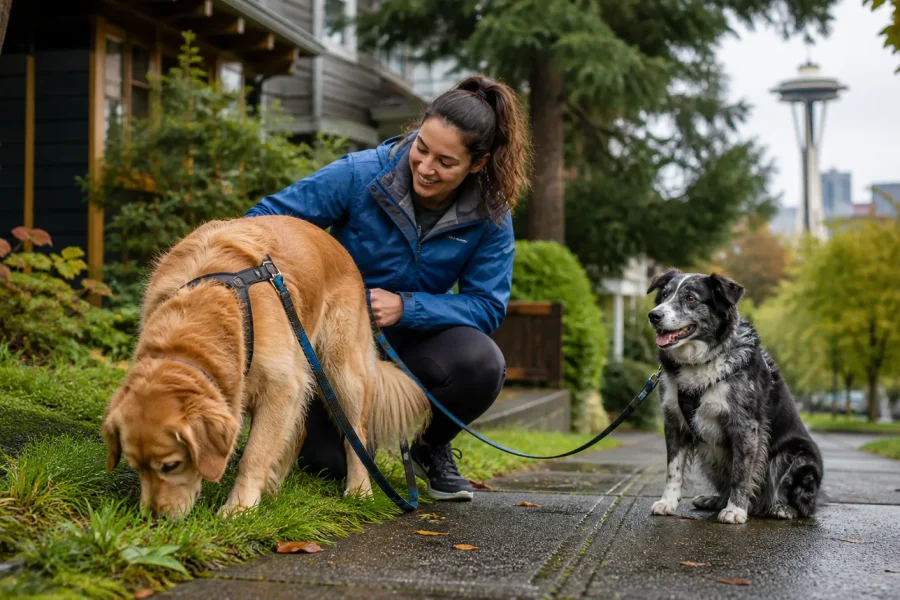
A familiar sidewalk can hold completely different information from one day to the next. Dogs may learn who passed through, whether another animal was nearby, what food was dropped, or whether something in the area has changed. That is why your dog may stop at the same tree, patch of grass, or curb again and again.
We think of scent as a dog’s neighborhood newsfeed. People might check messages, read local news, or catch up with friends before starting the day. Dogs do something similar through their noses. Each sniff gives them a small update about their community.
Sniffing is not usually stubbornness or a lack of focus. It is a normal behavior that helps dogs understand where they are. During our walks, we watch for the difference between relaxed curiosity and a dog who seems worried or overwhelmed, because the reason behind the sniffing matters.
More Sniff Time Can Support Calmer Behavior
A walk that includes scent exploration gives a dog more than physical movement. Sniffing asks their brain to sort through information, notice details, and choose where to investigate. That kind of meaningful activity can leave some dogs looking more settled afterward.
For many dogs, slowing down for a few minutes can be especially helpful after spending time indoors or when the world around them feels busy. Rather than rushing from one block to the next, a dog can pause, take in the area, and reset at their own pace. We often see that a balanced walk includes both movement and moments of quiet investigation.
Enrichment-focused dog walking is built around that balance. It does not mean every walk has to be long or completely unstructured. It means we consider the dog in front of us and make room for exercise, choice, exploration, and positive experiences.
A satisfying walk may include:
- A chance to sniff a safe grassy area
- Time to investigate trees, posts, and other scent-rich spots
- Gentle movement at a pace that suits the dog
- Simple guidance when it is time to keep moving
- A calm return home after both body and brain have had something to do
Create Walks That Balance Sniffing and Safety
Giving your dog sniff time does not mean stopping at every scent or letting the leash lead the whole walk. Structure still matters. We recommend building in intentional sniff breaks, then helping your dog move along when it is time to continue.
A simple cue such as “go sniff” can help create a clear difference between exploration time and walking time. Quieter routes, open grassy spaces, and less crowded areas may also make it easier for some dogs to relax and investigate without feeling rushed. For dogs who find city activity exciting or difficult, shorter sniff breaks in a calmer setting can be more comfortable than a long, overstimulating outing.
Safety should always guide the plan. Keep an eye out for hazards before allowing your dog to investigate, and use a leash length that gives them room without putting them too far from you. We stay alert for items that can be unsafe, including trash, unfamiliar food, chemicals, sharp objects, and animals your dog does not know.
During a well-managed walk, we aim to balance:
- Your dog’s interest in exploring
- Your need for steady movement and clear boundaries
- The environment and any possible hazards
- Your dog’s comfort around people, dogs, and traffic
Know When Sniffing May Need Extra Support
Most sniffing is simply a healthy part of being a dog. Still, it is worth noticing when your dog’s behavior changes suddenly or when sniffing seems tied to stress. A dog who is curious may pause, sniff, and move on. A dog who is uneasy may seem unable to settle, repeatedly pull away, freeze, or scan the area instead of enjoying it.
Other changes to watch for include reluctance to leave home, difficulty moving forward on familiar routes, new fear around sounds or people, or a sharp change in energy or appetite. No single behavior tells the whole story, but patterns can help you understand whether your dog needs more support.
When a change is sudden or comes with changes in appetite, energy, or interest in walks, speaking with a veterinarian is a good first step. For dogs who need help with confidence, loose-leash skills, or busy Seattle surroundings, positive-reinforcement-based training and personalized care can create calmer, more comfortable routines. We focus on helping dogs learn without pressure, while respecting their individual comfort zones.
Make Space for Your Dog’s Next Great Sniff
The next time your dog stops to investigate a patch of grass, try seeing that pause as part of the walk instead of a delay. A few safe, intentional sniff breaks can give your dog a chance to learn about their surroundings, make choices, and enjoy the outing more fully. Pay attention to how they respond, then adjust the pace and setting to fit their needs.
Every dog has a different energy level, confidence level, and comfort zone. The best routine is one that includes guidance and safety while leaving room for the small discoveries that make a dog’s day feel interesting.
Make Every Walk More Rewarding
At The Pet Care Club of Seattle, we turn daily outings into engaging experiences that support your dog’s body and mind. Our enrichment-focused dog walking services give dogs time to investigate, move, and enjoy purposeful adventures at their own pace. Give your dog a walk that offers more than a quick trip around the block.