

A Fulfilling Workday Starts with a Confident Dog
Dogs can have happy, emotionally healthy days at home while you are at work. Entertainment is not about keeping your dog active every minute. We want to help dogs enjoy natural behaviors, use their brains, feel safe, and rest comfortably.
Many dogs sleep for much of the day, and that is completely normal. A satisfying routine includes movement, mental activity, quiet rest, and connection with people. If you see destructive chewing, ongoing barking, pacing, indoor accidents, or intense excitement when you come home, your dog may need more support. These behaviors can have many causes, so we recommend patience and positive guidance rather than punishment.
Build a Safe Solo Routine Before You Leave
A predictable morning can make alone time feel easier. Before work, give your dog an activity that fits their age, health, personality, and current behavior needs. A long outing is not always the answer. For some dogs, a short walk with plenty of sniffing is more satisfying than covering a lot of distance quickly.
Morning options may include:
- A sniff-filled neighborhood walk
- A short positive-reinforcement training game
- Calm backyard exploration
- Gentle play with a favorite toy
- A few minutes of simple scent work
Try to keep departures calm and ordinary. We suggest preparing your dog’s food activity ahead of time, then giving it to them shortly before you leave. Soft music, a cozy resting spot, or a consistent departure cue can also signal that it is time to settle.
Puppies, newly adopted dogs, and dogs with separation-related distress may need extra help building comfort with alone time. Start gradually when possible, and pay attention to how your dog responds. When you can’t be home, a supportive midday visit and guidance from a positive-reinforcement trainer can help address the underlying concern without adding stress.
Turn Meals Into Brain-Boosting Activities
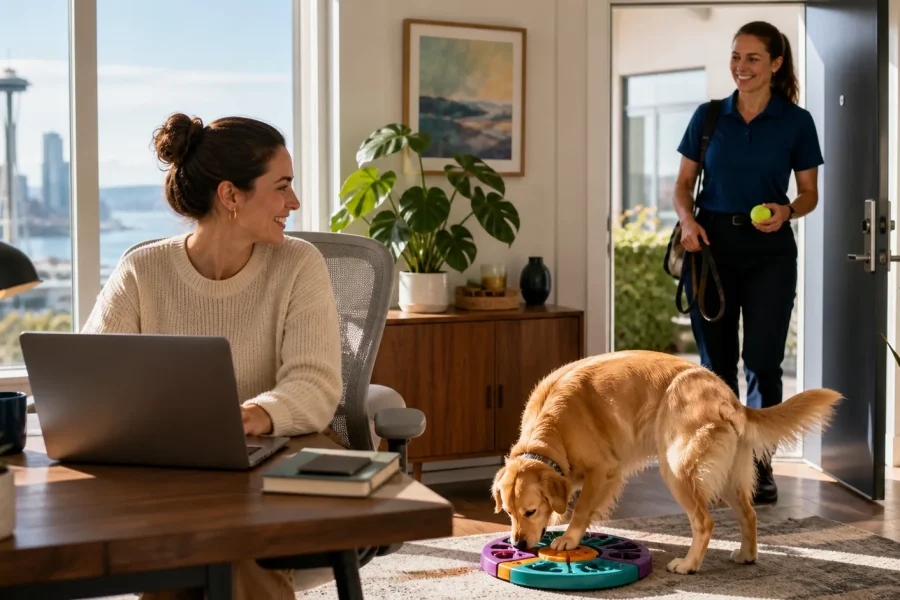
Food can do much more than fill a bowl. Searching, licking, sniffing, and problem-solving give dogs appropriate ways to use natural foraging behaviors. Instead of serving every meal the same way, we often encourage pet parents to make part of the meal an enrichment activity.
Some simple options include stuffed food toys, treat-dispensing toys, snuffle mats, scatter feeding, and scent games with food hidden in a safe area. A dog who is new to puzzles may do best with easy choices, such as kibble scattered across a rug or a loosely filled toy. Dogs with more experience may enjoy frozen layers of food or a more challenging puzzle.
Keep enrichment food within your dog’s regular daily portion. It can be easy to offer extra treats without realizing how much has been added.
Safety matters, too. Choose products that are durable and appropriately sized for your dog, and watch how they use any new item before leaving it available during unsupervised time. Dogs that guard food, become frustrated, or try to destroy and swallow puzzle pieces may need a different approach. We recommend professional support for those concerns.
Add Midday Variety with Enrichment-Focused Dog Walking
A midday break can make a big difference when your workday includes a long commute, extended meetings, or many hours away from home. It gives your dog a chance to potty, stretch, explore, and reset before returning to a quieter afternoon of rest.
Enrichment-focused dog walking is about more than distance. At The Pet Care Club of Seattle, we use science-guided, positive-reinforcement care that considers what makes each dog feel comfortable and confident. Some dogs enjoy a relaxed sniff walk with lots of choice. Others benefit from gentle training practice, confidence-building activities, or a slower pace in a familiar area.
A thoughtful visit can be adapted for different needs, including:
- Puppies learning about the world
- Adolescent dogs with lots of energy
- Senior dogs who prefer a gentler outing
- Shy dogs who need space and patience
- Dogs working on specific behavior goals
Not every dog needs the same kind of activity. A fast-paced route may be fun for one dog but overwhelming for another. We focus on helping each dog have an outing that feels safe, interesting, and manageable.
Choose Toys and Chews That Match Your Dog’s Needs
Leaving every toy out all the time can make them less interesting. Instead, rotate a small collection so familiar items feel fresh again. Different toys can meet different needs, whether your dog enjoys chewing, licking, shredding, tugging, or scent exploration.
Home enrichment does not need to be expensive or complicated. A cardboard box with paper and a few pieces of food, a muffin tin with food hidden under safe toys, or a paper-towel roll puzzle can add variety. Still, new activities should be supervised first. We want to know that a dog can use an item safely before it becomes part of their solo routine.
Your dog’s play style matters. Some dogs prefer soft toys, while others need sturdy chews or food-based activities. If your dog destroys toys or swallows pieces, remove those items and choose safer alternatives. Good enrichment should leave your dog content and settled, not frustrated, overstimulated, or at risk.
Create a Workday Plan Your Dog Can Enjoy
The best plan is realistic, consistent, and shaped around your dog. Start with one or two changes, then observe what happens. A simple routine might include a pre-work walk or training game, a safe food activity at departure, a comfortable place to rest, and a midday break when your dog needs one.
Calm sleep is part of a well-enriched day, not a sign that your dog is bored. When your dog has appropriate outlets before and during the workday, they can learn that time alone is safe, predictable, and peaceful.
Give Your Dog More to Look Forward To
At The Pet Care Club of Seattle, we tailor outings to your dog’s energy, interests, and pace. Enrichment-focused dog walking gives them purposeful activity and fresh experiences while you handle your day. Let us help make their weekday routine more engaging and rewarding.